
When your skin feels the season
After a few days of sun, salt water and air-conditioning, your skin can start to feel tired. Dry patches on the arms and legs. A tan that is no longer even. A dullness that moisturiser does not quite fix. And perhaps, alongside it, a sense that you could do with something deeply warm and simple — something that has nothing to do with screens.
The Moroccan bath has been answering that need for centuries. It is one of the oldest rituals in the spa world: steam, soap, scrub, rinse. Nothing complicated, nothing hurried, and the feeling afterwards is unlike anything else on our menu.
At Olive Spa, inside V Hotel Fujairah, the Moroccan bath takes place in a private hammam room, with one therapist, at your pace.
What is a Moroccan bath?
A Moroccan bath is a traditional cleansing ritual from Morocco, performed in a hammam — a warm, humid steam room. It combines four elements:
- Steam to warm the body and soften the skin
- Black soap (savon noir), a soft, gel-like soap traditionally made with olive oil
- The kessa glove, a coarse exfoliating mitt used to scrub away dead skin
- Warm water, poured over the body to rinse everything away
It is less a massage than a deep cleanse, although the scrubbing itself is rhythmic and soothing. Many guests are surprised by how much skin comes away during the scrub. It is a normal part of the ritual, and the reason the skin feels so smooth afterwards.
A short history of the hammam
Public bathhouses have been part of life across North Africa and the Middle East for well over a thousand years. In Moroccan towns, the neighbourhood hammam traditionally sat close to the mosque, the bakery and the fountain, and a weekly visit was as much a social occasion as a way to get clean. Families went together, friends caught up in the warm rooms, and the scrub was done with care and without hurry.
The ingredients have barely changed. Black soap made with olive oil, a coarse kessa glove, warm water poured from a bowl, and sometimes rhassoul clay or argan oil afterwards. A modern spa hammam keeps those elements but adds privacy and calm: your own room, your own therapist, and nobody waiting for the next turn.
The ritual, step by step
- Warm up in the steam. You relax in the warm hammam room for several minutes while your body and skin warm through.
- Black soap. Your therapist spreads black soap over your body and leaves it for a few minutes to soften the skin.
- Rinse. A warm rinse removes the soap.
- The kessa scrub. Your therapist scrubs the whole body with the kessa glove in firm, methodical strokes. Tell them if you would like it gentler.
- Final rinse. Warm water washes away the loosened skin.
- Moisturise or massage. A nourishing oil or cream is applied, or you move on to your massage.
- Rest. A few quiet minutes with water or herbal tea before you dress.
The whole Moroccan bath takes 60 minutes, and your hair wash is included, so you step out fresh from head to toe.
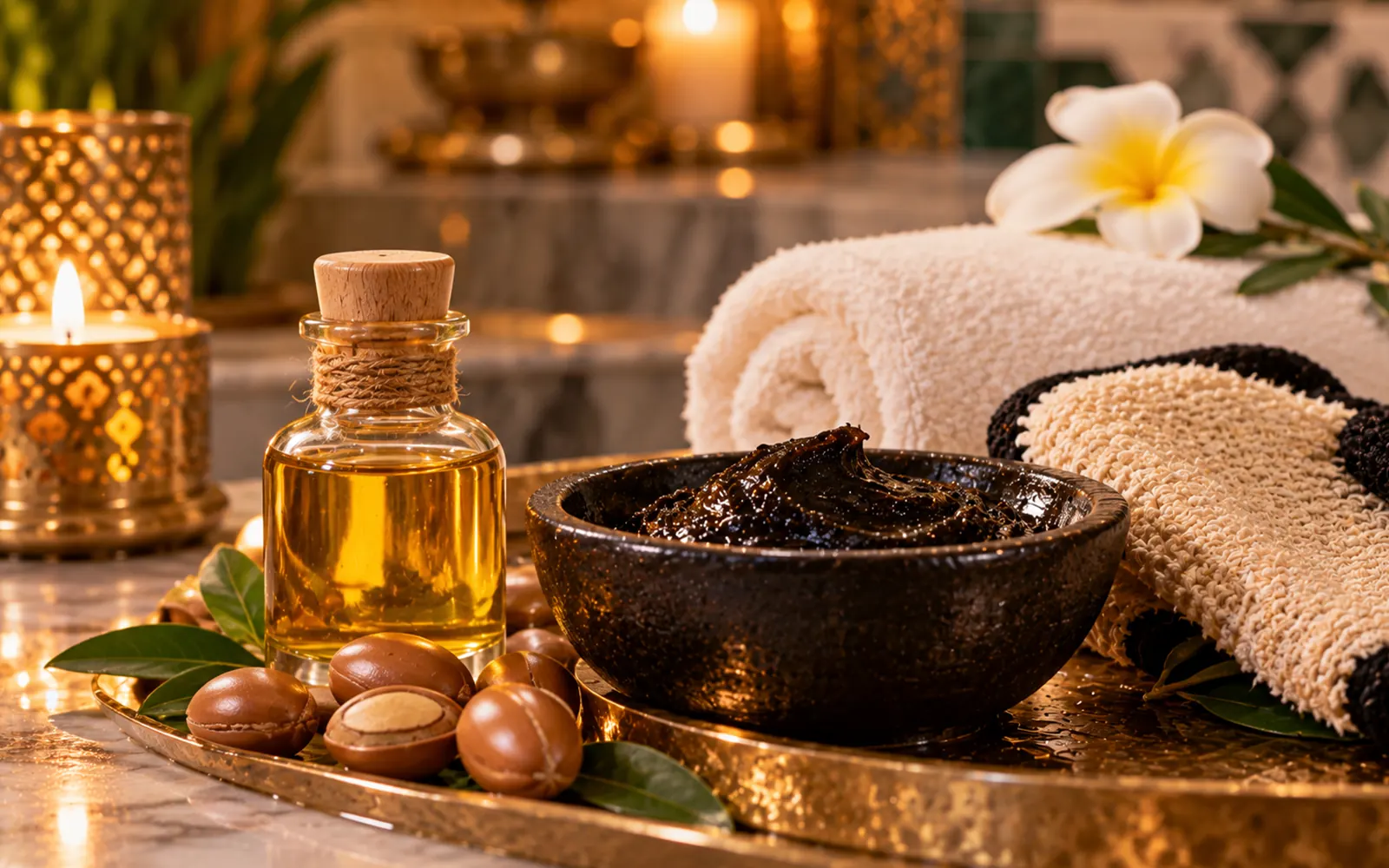
Moroccan massage after the bath
If you searched for a Moroccan massage in Fujairah, this is what most people mean: a relaxing oil massage after the bath, traditionally with argan oil.
Your skin has just been thoroughly exfoliated, so it takes oil beautifully. The massage that follows is gentle to medium in pressure, with long flowing strokes, closer to a full body massage than to deep tissue work. Together, the bath and the massage make a complete two-part ritual: cleanse first, then nourish and relax.
The bath and massage package takes 60 minutes in total. The massage lasts 15 minutes and covers your back, arms and legs, using warm argan oil.
What to wear, and your privacy
Modesty is one of the most common concerns about a Moroccan bath, so let’s be clear:
- The ritual takes place in a private hammam room, not a shared bath.
- Disposable underwear is provided.
- Your therapist uses towels to keep you covered where you prefer, and explains each step before it happens.
- You can ask for any area to be skipped.
- Please tell us your therapist preference when booking, and we will do our best to match it.
Your first Moroccan bath: what it really feels like
If this is your first time, here is an honest picture.
The heat. The hammam room is warm and humid, not scorching like a sauna. Most guests find it soothing within a minute or two. If you feel too warm, say so and your therapist will cool the room or give you a break.
The soap. Black soap feels soft and slippery, like a thick gel. It has an earthy, olive-oil scent.
The scrub. This is the part people talk about. The kessa glove feels firm and textured, a bit like a vigorous towel rub. It should feel invigorating, never raw. If an area is sensitive, ask for a lighter touch.
The surprise. You will probably see small grey rolls of dead skin coming away. That is normal, even if you exfoliate at home, and it is the reason your skin will feel so soft.
The rinse. Warm water poured over you from a bowl. Most guests say this is the moment they finally switch off.
Afterwards. Skin that feels noticeably smoother, a warm, heavy kind of relaxation, and often a very good night’s sleep.
Before a wedding, an event or a holiday
The Moroccan bath has always been part of celebrations in the region, especially before weddings. If you are preparing for a big day, we suggest booking three to five days before, so any redness has settled and your skin looks smooth and even in photographs. For self-tan, book two or three days ahead so the tan goes on evenly. Planning a bridal party or a group visit? Contact us in advance and we will do our best to arrange times that suit everyone.
Skin tips: when to book, and when to wait
The scrub is thorough, so timing matters.
Good times to book
- Before a beach holiday, wedding or event, so your skin looks even and smooth
- When your skin feels dry or dull
- Before a self-tan, two or three days ahead
Wait if you have
- Sunburn, peeling or very recent sun exposure
- Waxed, shaved or lasered skin in the last 24 to 48 hours
- Cuts, rashes, eczema flare-ups or active skin conditions
- Recently had a chemical peel or certain skin treatments
If you are pregnant, have a heart condition, high or low blood pressure, or feel unwell in heat, please tell us before booking. Steam is not suitable for everyone, and we may recommend a shorter steam or a different treatment.
Moroccan bath, steam room or body scrub: what’s the difference?
| Compared on | Moroccan bath | Steam room only | Body scrub |
|---|---|---|---|
| Steam | Yes | Yes | No |
| Soap | Traditional black soap | No | No |
| Exfoliation | Full body, kessa glove, firm | No | Granular scrub, usually lighter |
| Done by a therapist | Yes | No | Yes |
| Rinse | Warm water poured over | Shower | Shower |
| Feels | Deeply cleansed, very smooth | Warm, relaxed | Smooth, refreshed |
Who usually chooses a Moroccan bath?
- Beach-holiday guests at V Hotel Fujairah wanting smooth, even skin.
- Brides, grooms and guests preparing for weddings and events.
- Residents who make it a monthly ritual through the hot summer months.
- Anyone curious about one of the oldest spa traditions in the region.
- Couples and friends booking a shared spa afternoon. See couples massage.
Would you like the bath on its own, or with a massage after? Ask us which suits your day.
A Moroccan bath through Fujairah’s seasons
In the hot, humid summer months, many residents use the Moroccan bath as a monthly reset after long days moving between heat and air-conditioning. In the cooler months, from around November to March, it is a popular way to end a weekend of hiking, kayaking or beach days on the East Coast. Either way, it pairs well with the region’s rhythm: outdoors by day, a warm, quiet ritual by evening.
Aftercare
- Moisturise for the next few days to keep skin soft.
- Avoid strong sun for 24 hours, as freshly exfoliated skin is more sensitive.
- Skip other scrubs and harsh products for a few days.
- Drink water, especially after time in the steam.
Why book your Moroccan bath at Olive Spa?
- A private hammam room, never a shared bath.
- The traditional ingredients: black soap, kessa glove, warm water.
- Explained, step by step, so you always know what is coming next.
- Easy to combine with a massage, from Kerala Ayurvedic to full body.
- Inside V Hotel Fujairah, convenient for hotel guests and visitors alike.
Duration and price
| Treatment | Time | Price |
|---|---|---|
| Moroccan bath | 60 minutes | AED 120 |
| Moroccan bath + massage | 2 hours | AED 240 |
See all packages and combinations on the spa menu.
Helpful guides
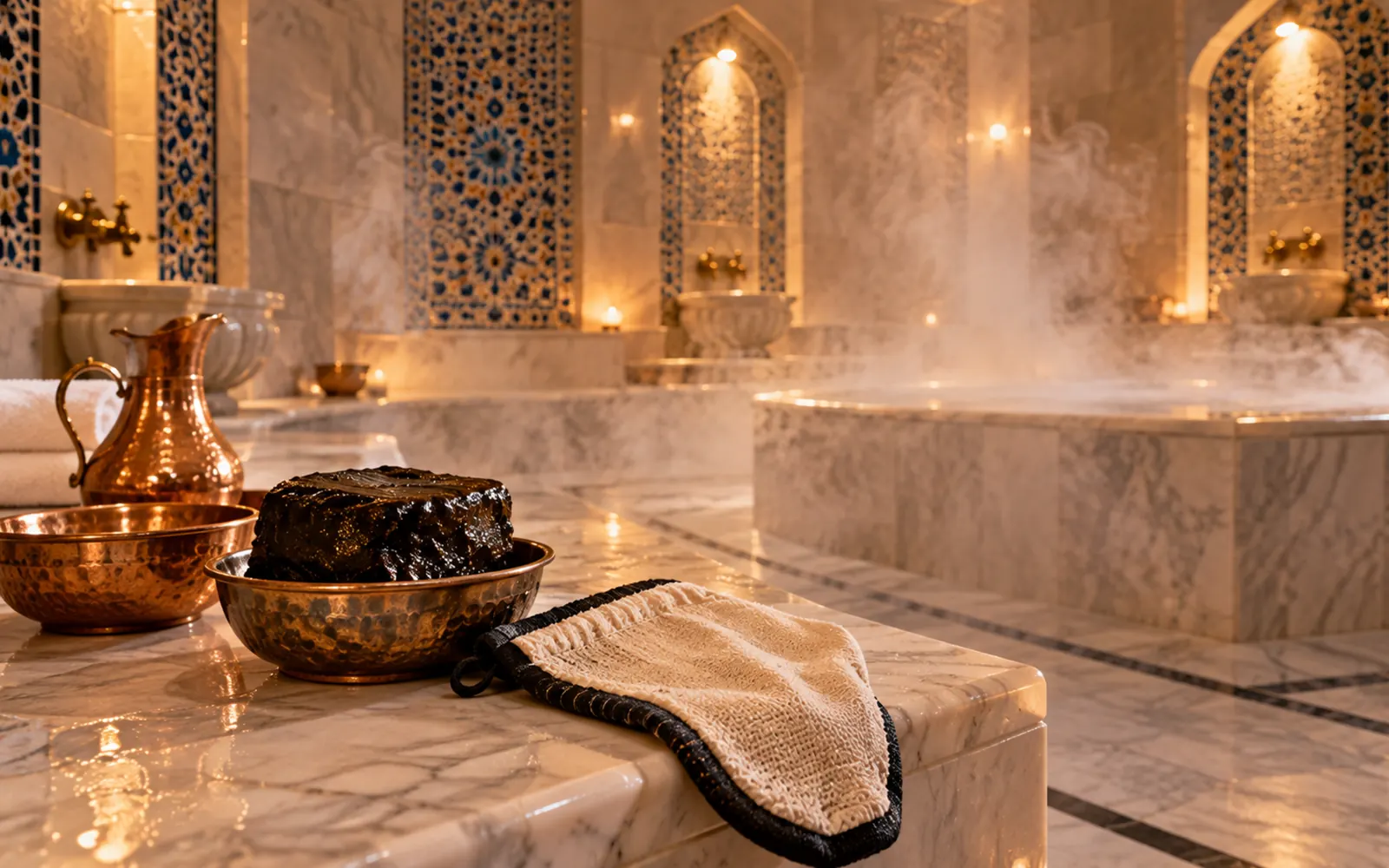
Moroccan Bath vs Steam Room vs Body Scrub
All three involve warmth or exfoliation, but only one combines steam, black soap and a full kessa-glove scrub. Here is the difference.
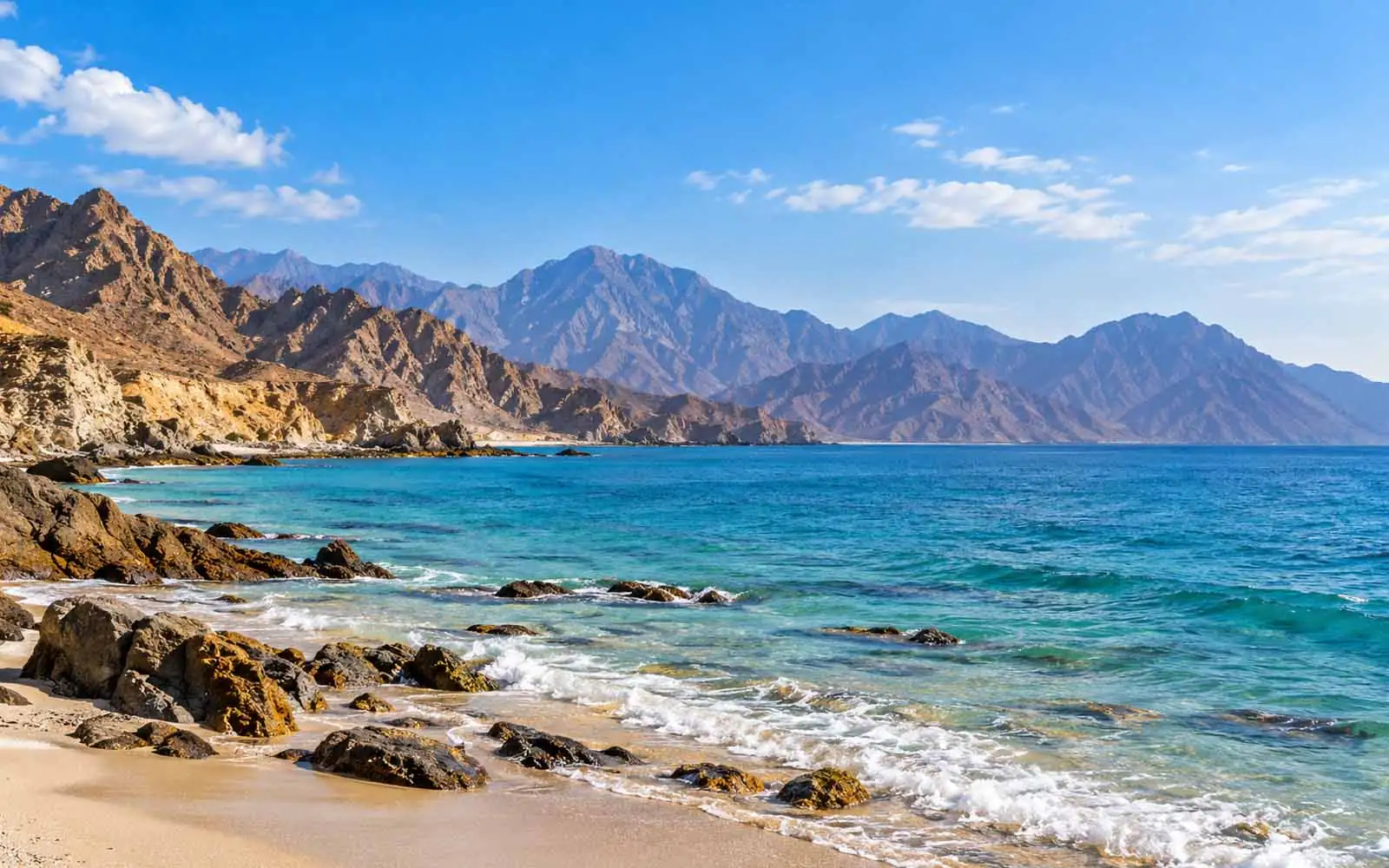
A Slow Weekend in Fujairah: Beach, Mountains and a Spa Afternoon
Old forts, the oldest mosque in the UAE, snorkelling off Snoopy Island, wadi walks, and an afternoon at the spa to finish.
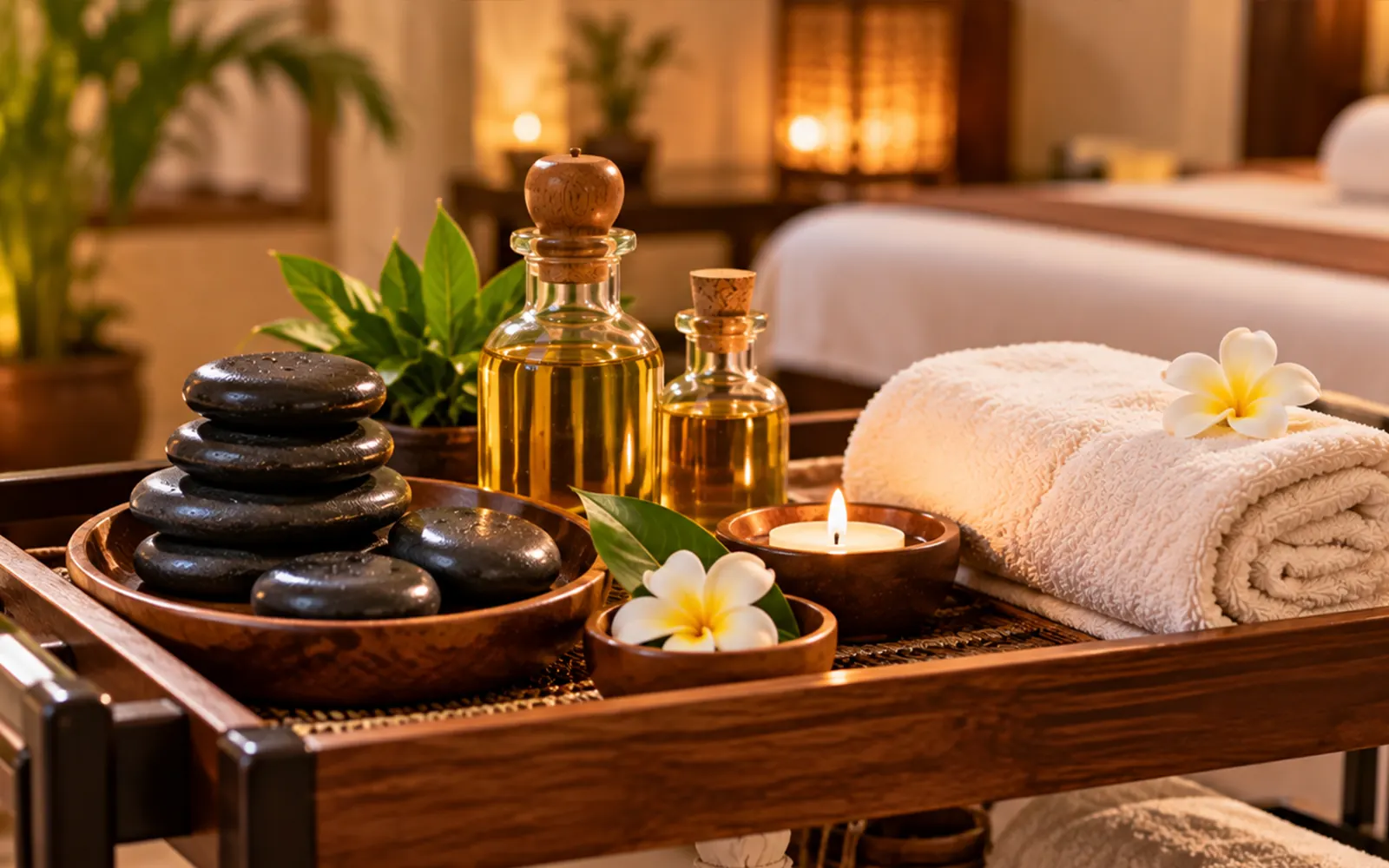
How Long Should a Massage Be: 60, 90 or 120 Minutes?
Sixty minutes covers the whole body. Ninety gives your back and legs the time they need. One hundred and twenty is an afternoon.
Olive Spa at a glance
- Business
- Olive Spa, a day spa and massage centre
- Location
- Olive Spa, 1st Floor, V Hotel, Al Fassel Rd, Fujairah, United Arab Emirates
- Treatments
- Full body, deep tissue, Russian-style, Kerala Ayurvedic, Thai and Thai oil massage; Moroccan bath; couples treatments
- Session length
- 60, 90 and 120 minutes
- Prices
- Massages from AED 120 for 60 minutes
- Open to
- Hotel guests and visitors
- Opening hours
- Daily, 9:00 AM to 3:00 AM
- Phone
- +971 54 594 0701 or +971 50 271 8276
- +971 50 271 8276
- Book
- Online, by phone or on WhatsApp
Book your Moroccan bath in Fujairah
If your skin and your mind could both do with a fresh start, step into the steam. Book the bath on its own or with a massage after, and leave the rest to us.
Book online, call +971 54 594 0701 or +971 50 271 8276, or message us on WhatsApp (+971 50 271 8276).